

Locronan: the secrets of one of the most beautiful villages in Finistère
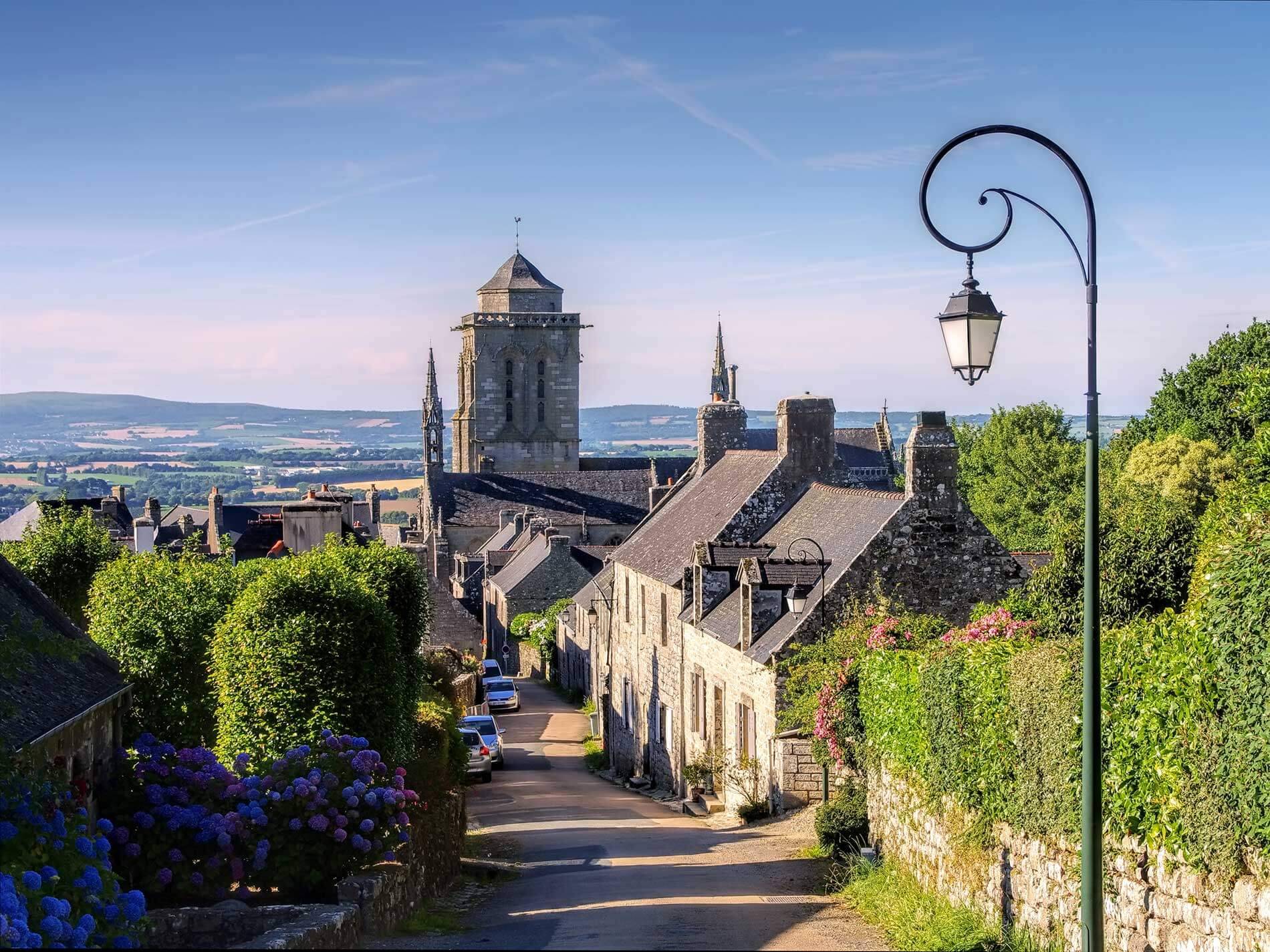
If Brittany is known for its legends and traditions, it is also renowned for its ever-present religious architecture. The village of Locronan, just fifteen kilometres from Quimper, has been listed as a Historic Monument since 1924 and is one of the most prestigious sites in Brittany. Its church, rising in the heart of a magnificent granite square, is one of the finest examples of 15th-century Gothic architecture. Yet Locronan is far more than this remarkable building. Perched on a hillside, just a few kilometres from the sea, this charming village reveals many other treasures.
Locronan: the story of a medieval town
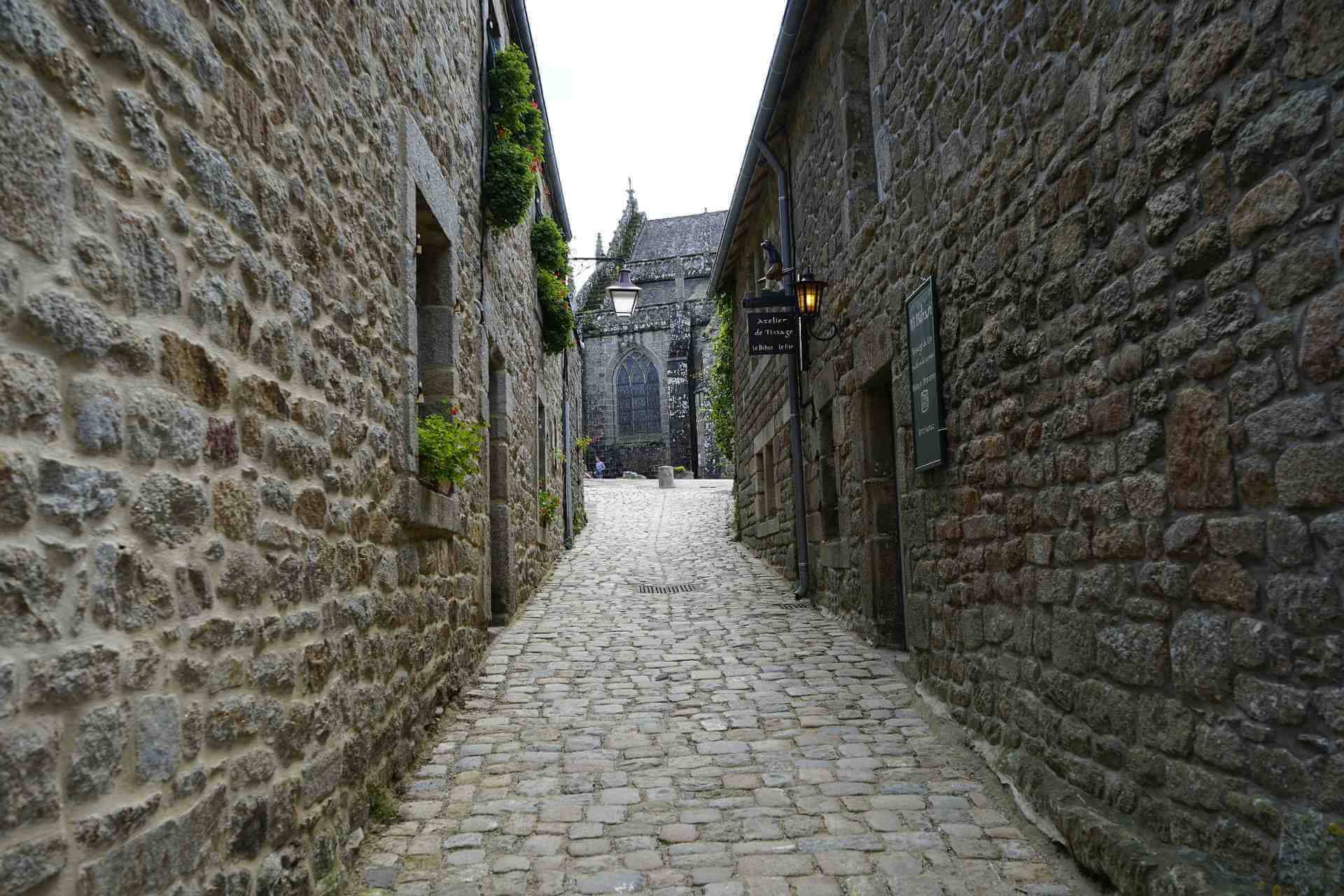
Awarded the label “Petite Cité de Caractère de Bretagne”, Locronan is also part of the exclusive circle of the Most Beautiful Villages in France. A short walk through its granite streets is enough to appreciate its architectural richness: cobbled lanes, elegant mansions and beautifully preserved Renaissance houses.
Although modest in size, with just over 800 residents, Locronan enjoys a reputation that extends far beyond Brittany. Its history, legends and traditions make it a highly sought-after destination, attracting around 400,000 visitors each year — always welcomed with Breton hospitality.
The legend of Saint Ronan
Behind every Breton place name lies a story, and Locronan is no exception. “Lok-Ronan” means “the place of Ronan”, referring to Saint Ronan, an Irish bishop who came to Christianise the region and is said to have performed miracles.
Between legend and history, it is difficult to separate fact from fiction. According to the legend, Ronan had a vision of an angel instructing him to evangelise this part of Brittany, then influenced by druidic traditions. He crossed the Channel and built an oratory on a nemeton — a sacred natural site marked by twelve points symbolising the months of the year — in the Nevet forest.
His miracles quickly attracted followers, including a man he saved from wolves, who became his first disciple. King Gradlon himself eventually supported his mission.
Ronan transformed the Celtic sanctuary into a Christian place of worship. The twelve sacred points became twelve stations, each marked by a statue of a saint. As an act of penance, Ronan walked this path barefoot and fasting every week.
In his later years, he left Cornouaille and died in Hillion, near Saint-Brieuc. His remains were later brought back to Locronan, where they are now kept in the Pénity Chapel, next to Saint Ronan’s church.
Locronan, a town of art and history – the weavers’ town
Beyond its architecture, Locronan is also known for its rich textile heritage. From the 15th century onwards, hemp and flax cultivation led to the production of sailcloth.
The village supplied some of Europe’s greatest fleets: the caravels of Christopher Columbus, ships of the French Royal Navy, the English navy and even vessels of the Spanish Armada.
The Bureau des Toiles, built in 1669 to control the quality of fabrics, still stands proudly in the village. Today, Locronan is part of the Brittany Hemp and Linen Route.
Locronan, a film star
With its granite houses dating from the 15th to the 18th century, Locronan offers an authentic historical setting highly valued by filmmakers.
Since the 1920s, more than thirty films have been shot here, including Tess by Roman Polanski, Chouans! by Philippe de Broca and A Very Long Engagement by Jean-Pierre Jeunet.
To discover behind-the-scenes stories and fascinating anecdotes, the tourist office offers guided tours throughout the year.
The Locronan Museum of Art and History
Founded in 1934, the Charles Daniélou Museum of Art and History is a must-visit for art lovers and curious visitors alike.
Its collection retraces key moments in the village’s history and features around a hundred paintings and drawings showcasing the richness of Breton art.
Locronan’s must-see events
The Grande Troménie is undoubtedly Locronan’s most important event. This unique procession is one of Brittany’s major religious celebrations.
Every six years in July, thousands of pilgrims in traditional costume gather to follow a sacred route of over 12 kilometres, based on the ancient nemeton christianised by Saint Ronan. The path remains open day and night for a week.
Far from being a simple folkloric event, it is a deeply meaningful moment for locals — an expression of Breton faith that guides and inspires pilgrims.
On a smaller scale, the Petite Troménie takes place every year between two Grandes Troménies. Traditional costumes, crosses and banners from Locronan and surrounding villages are also part of this procession.