

The Baie des Trépassés: the last witness to shipwrecks
If there is one region rich in legends of all kinds, it is Brittany. Whether rooted in the land or the sea, the stories told for generations by the fireside give each place a unique aura. The Baie des Trépassés, in Finistère, is no exception. Nestled in the shadow of the iconic Pointe du Raz, it reveals itself today as a preserved natural site — far removed from the dark past that once shaped its legend.
The Baie des Trépassés: the legend
“If you want to learn how to pray, go to sea.” This Breton proverb echoes strongly in the legends — or rather the many legends — of Bon An Anao, the “bay of lost souls”, better known as the Baie des Trépassés.
Some say that, in the past, the bodies of sailors lost at sea would often wash ashore here, as if reminding mankind of its fragility in the face of the ocean. In reality, this phenomenon is more likely explained by tidal currents and prevailing westerly winds that carried them into the bay.
Yet the legend continues: it is said that these lost souls would return each year on 2 November to visit their loved ones, while the living lit large fires to offer them warmth.
Another, older legend rooted in pagan tradition claims that the bay served as a departure point for druids’ remains, carried towards the Île de Sein, where they were buried.
Although death seems closely tied to the Baie des Trépassés in these tales, the place itself is anything but gloomy. Quite the opposite: located at the western tip of the Pointe du Raz, it is often described as a true haven of beauty — one of Finistère’s must-see sites.
The Baie des Trépassés: a discreet and authentic site
Do not be misled by its dark legends. Nestled between the Pointe du Raz and the Pointe du Van, facing the wild Île de Sein archipelago, the Baie des Trépassés is a truly unforgettable place.
Its “Grand Site de France” label is a testament to its exceptional character and preserved environment. Here, nature reigns supreme, shaped by the constant forces of wind and sea.
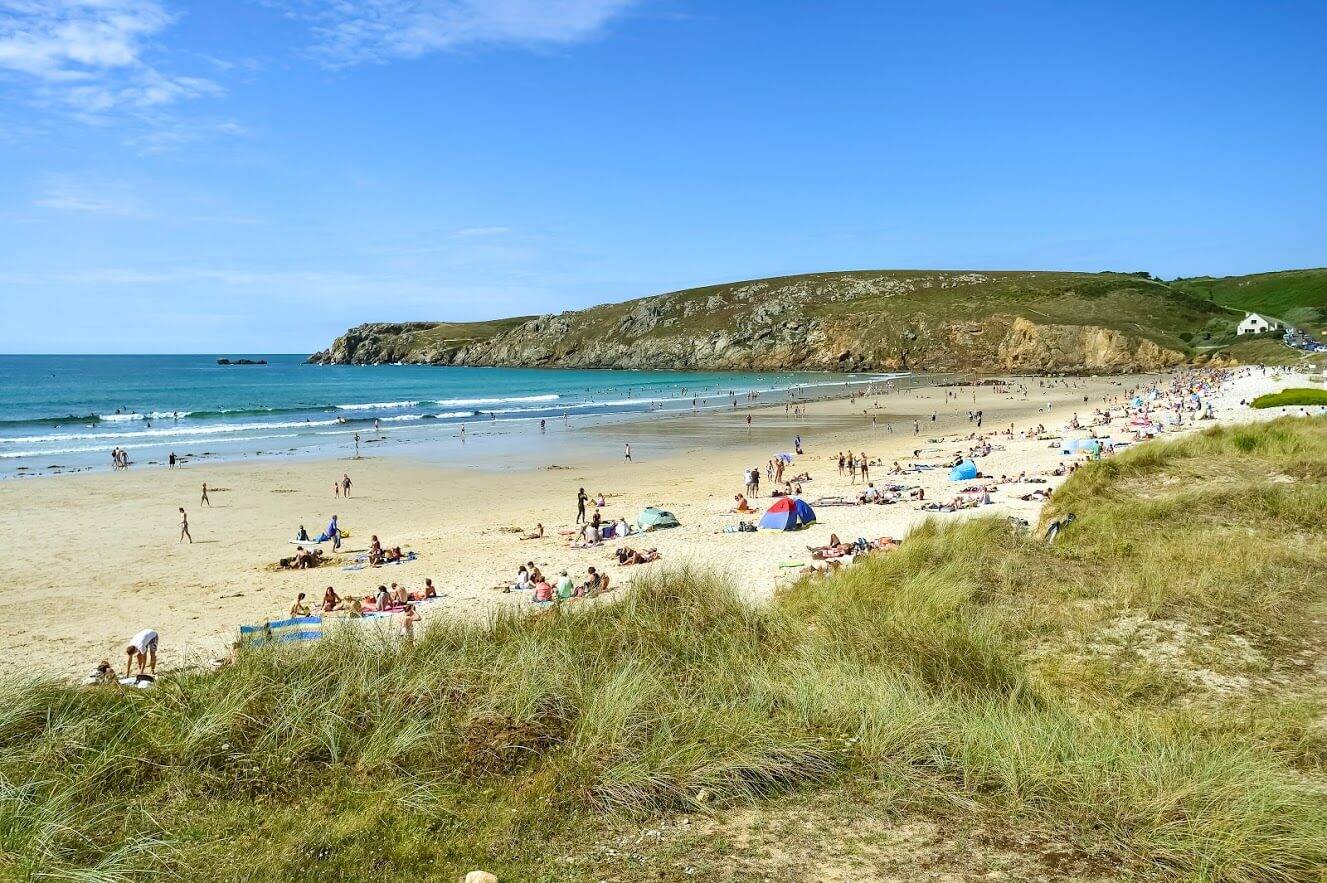
Take time to explore this bay with its strong personality. Walk along its long stretch of white sand, admire the breathtaking views over the ocean, listen to the waves crashing against the rocks, and feel the sea spray on your skin. Every moment here is a sensory experience.
The Baie des Trépassés: a protected and recognised site
The Baie des Trépassés is part of the Pointe du Raz “Grand Site de France”, a designation awarded to outstanding landscapes.
Its preservation is managed by a dedicated organisation committed to protecting the site while allowing visitors to fully experience its beauty. This label reflects both the heritage value of the site and the quality of its management.
It is granted for six years and can be renewed — or withdrawn — depending on the respect of strict environmental and conservation standards. Only a limited number of exceptional sites in France hold this distinction.
Visiting the Baie des Trépassés means discovering a truly protected natural treasure.
What to do at the Baie des Trépassés?
In summer, the bay attracts those seeking peaceful and unspoilt places. Its long sandy beach is perfect for relaxing and enjoying clear, refreshing waters. Swimming is supervised, allowing visitors of all ages to enjoy the ocean safely.
The bay is also a favourite spot for outdoor activities. Surfers appreciate its turquoise waters, dramatic cliffs and consistent waves — making it one of the most accessible surf spots in Finistère, ideal for beginners.
After a surf session, take time to relax and enjoy the setting. Sunsets here are unforgettable and not to be missed.
Hikers will also find plenty to explore. The famous GR34 coastal path passes nearby, leading either to the Pointe du Raz or the Pointe du Van. Spectacular landscapes and panoramic views await at every step.
For a change of scenery, head inland to the village of Cléden-Cap-Sizun, just five kilometres away. Here, no souvenir shops — only charming fishermen’s houses and a timeless Breton atmosphere.